UBI Piloters Network
Newsletter 28, June, 2026


Climate Commons Fund: A sustainable financing mechanism to fund cash for conservation
What if a community could own a share of the natural wealth its land generates, the way Alaskans receive annual dividends from oil revenues?
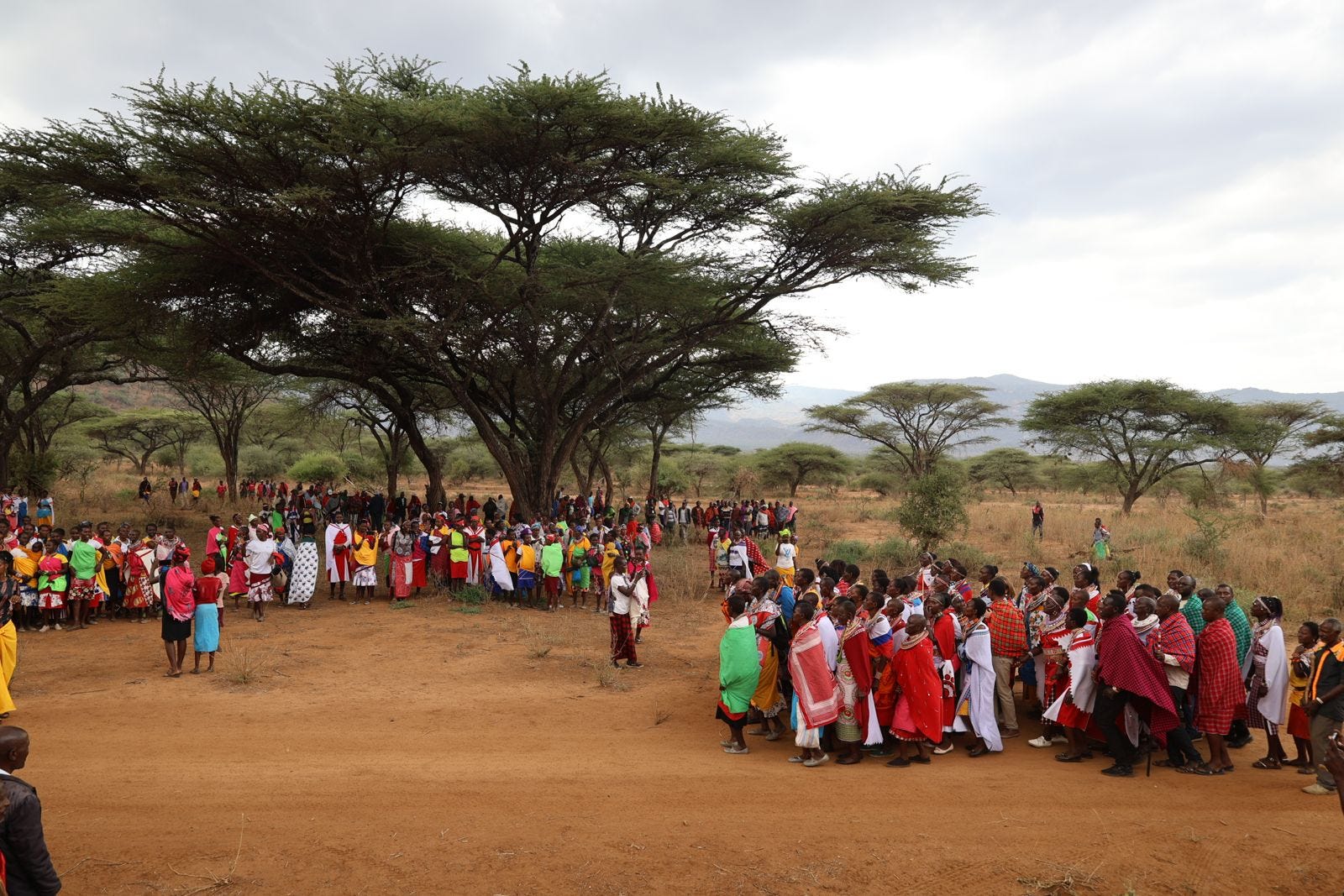
That is the premise behind the Climate Commons Fund (CCF), a community-owned conservation endowment being piloted with the residents of Il Ngwesi Conservancy in Laikipia, one of Kenya’s oldest community-owned conservancies.
Inspired by sovereign wealth-funded basic income programmes in Alaska, Brazil and the Marshall Islands, the CCF pools conservation finance into an endowment fund that generates returns and pays it back to the people of Il Ngwesi as unconditional cash. Every adult in Il Ngwesi is eligible for these payments, which will include a large lump sum cash transfer to support livelihood diversification, and an annual ‘Conservation Dividend’ linked to conservancy-wide ecological indicators. Payments are paired with workshops and training opportunities to help boost their conservation impact.
The CCF model directly challenges a structural injustice in conservation finance: communities bear the costs of land-use restrictions while revenues flow to intermediaries. The CCF inverts that logic, turning ecosystem stewardship into a permanent, community-owned income stream.
This Summer, Equal Right will launch the pilot phase of the Fund, using a lottery mechanism paired with mobile money transfers to distribute cash to an initial cohort of Il Ngwesi residents. This project has been supported by the Global Resilience Partnership’s RAIN Challenge and the Conservation Finance Alliance Incubator. The project is being delivered in partnership with GiveDirectly and the University of Wageningen’s BINC Lab.
The AI Dividend: Cash, Reskilling, and Community Support to Workers Displaced by AI
Fund for Guaranteed Income (F4GI) has launched the first-ever pilot combining direct cash, reskilling, and community support for workers navigating AI-driven economic transition.
Already underway and designed by impacted workers, the AI Dividend is the latest pilot from F4GI, a 501(c)(3) that has run more than 20 direct cash transfer programs nationwide.
The AI Dividend brings F4GI together with What We Will, a worker centre for people in industries impacted by rapid technological change that is developing a retraining curriculum for workers affected by AI-driven job loss, and an advisory council that assembles AI developers, researchers, policy experts, and workforce practitioners.
Workers displaced by AI often lack the time, money, or connections to learn AI skills even when they know they should. The AI Dividend addresses this gap by investing in workers so they can figure out what’s next, combining income stability with reskilling and community support in a way no existing program does. In 2026, the program aims to help 2,000 displaced workers find their footing in the AI economy.
An independent research study runs alongside the program to develop an open-source worker-support model for responding to AI displacement at scale.
‘Seen’, ‘Respected’ and ‘Empowered’: Exploring the Dignity Dividend of a Universal Basic Income by Vibhor Mathur
Individuals experiencing poverty face dual indignity: material deprivation and engagement with stigmatizing social policy. Universal Basic Income (UBI) is often pitched as a dignifying alternative to both challenges. This article presents a 2-year ethnographic investigation within a UBI pilot in South Indian urban slums.
The paper explores the dignifying potential of ‘UBI way’—unconditionality, universality, individualization, regularity—of delivering cash. Participants report enhanced recognition, strengthened social relations and increased agency through the intervention’s design features.
Importantly, the narratives accompanying the delivery of a UBI were key to these experiences of dignity. This study also presents a novel conceptual framework to operationalize dignity, based on recognition, relationality and autonomy, aiming to make dignity a ‘useful’ concept in development policy and practice.
Eight, a Belgian nonprofit that has been providing a basic income to vulnerable families and individuals in Africa for ten years.
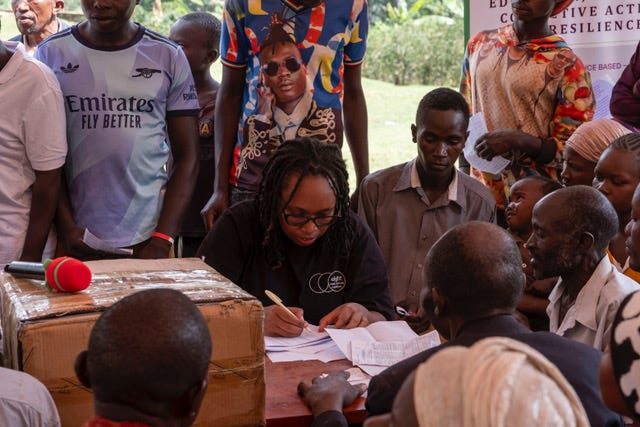
In January of this year, they launched a new project in Kapchorwa, Eastern Uganda. For the first time, we are combining a basic income with a community-based training in climate adaptation, as many coffee farmers in the region are heavily affected by landslides caused by human activity and climate change.
They believe that 1 + 1 = 3 and want to prove it. That’s why this project will be closely monitored through scientific research (via IOB, University of Antwerp). Three coffee communities will participate over two years (until January 2028): one will receive only a basic income, one will receive only training in climate adaptation, and one will receive both. This allows them to measure the true impact. The first results will follow next year.
Adults receive €16 per month, children €8 (through their mother or female guardian).
Basic Income—A Transformative Policy for Sustainable Welfare? Part 1: Four Arguments for Basic Income as an Eco-Social Tool by Simon Birnbaum
Is basic income (BI) a powerful tool for the green transformation of advanced welfare states?
Since the early steps of green ideology formation, basic income-oriented policies have been widely embraced by environmentally concerned thinkers, and key actors of the green movement. But even though discursive patterns that link basic income to ecological values are prominent and consistent over time, such claims often take the form of general suggestions rather than rigorously developed arguments. This paper—part 1 of 2—will reconstruct and clarify key arguments expressed or implied in normative theory and policy discourse that relates BI to eco-social objectives. I distinguish four lines of argument for why BI might have unique advantages over conditional forms of income support in terms of sustainable welfare.
Basic Income—A Transformative Policy for Sustainable Welfare? Part 2: Four Paradoxes in the Eco-Social Case for Basic Income by Simon Birnbaum
There are compelling arguments for why basic income may be a powerful, transformative eco-social policy tool in advanced welfare states. However, closer scrutiny reveals that the relationship between BI's ecological and social objectives is also marked by deep tensions. This second part of the article—Part 2 of 2—identifies and explores four paradoxes that seriously complicate the green case for basic income. These paradoxes help explain why the ecological and social goals expressed in post-growth BI discourse often conflict more deeply than green BI proponents may admit. They also suggest that common claims of BI as a radically transformative, green policy are overstated. Still, the tensions exposed are paradoxes, not fatal contradictions. Rather than undermining the eco-social case for BI, they can be addressed constructively and used to guide the formulation of BI's precise role and value in the green transformation of welfare states.