UBI Piloters' Network
Newsletter 24, Jan, 2026

Can a basic income keep rainforests standing? University of Bath researchers are finding out
Researchers partner with climate change charity Cool Earth in world-first basic income pilot for indigenous people
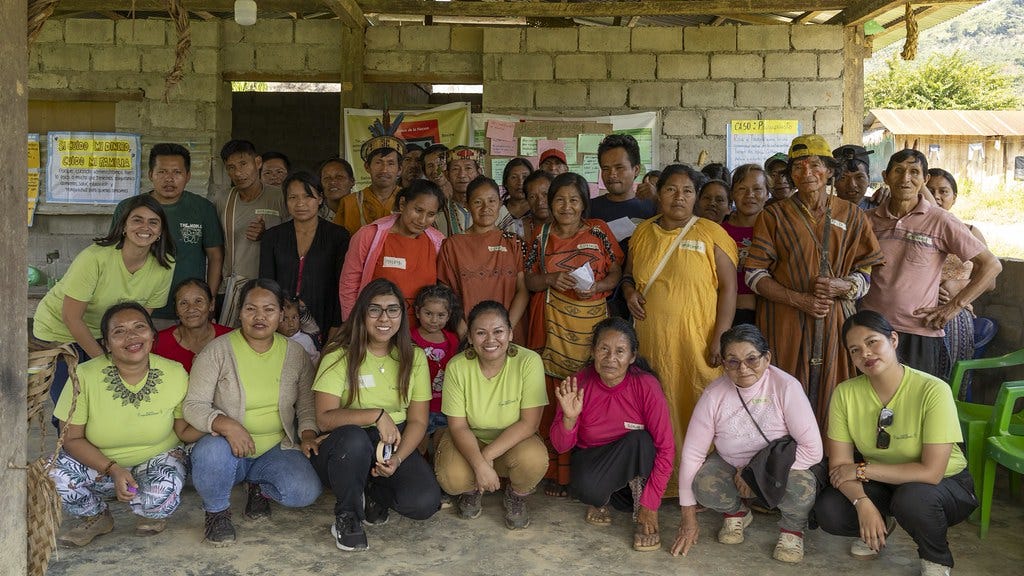
University of Bath social policy researchers are partnering with climate change charity, Cool Earth, to analyse the results from the world’s first basic income pilot for Indigenous peoples in the Amazon rainforest.
The study will look at data gathered during the pilot in Peru, involving three Indigenous communities and 211 people in the Asháninka region. They received a basic income in the form of cash transfers to spend as they liked during the two-year project.
Basic Income for the Arts in Ireland Made ‘Permanent’
The Irish Government has announced that a successor scheme to the Basic Income for the Arts pilot project will be made permanent.
The three-year pilot paid €325 per week to 2000 arts workers from August 2022. The final payments will be made in February 2026. Five impact assessment reports have been published.
Following the Budget announcements on 6 October 2025, Minister Patrick O’Donovan said:
‘‘The Basic Income for the Arts pilot scheme, which I extended this year, will end in 2026, and I will bring a successor scheme to Government with the intention of embedding a permanent basic income in the Arts and Culture sector. This scheme is the envy of the world, and a tremendous achievement for Ireland, and must be made futureproof and sustainable.’’
At this stage, there are no details about the new scheme, but a newspaper report in the Irish Times, taken together with the size of the Department’s budget and with questions asked and answered in a recent public consultation, suggest that the new scheme will be similar to the pilot, with a weekly payment of about €325 made to about 2000 recipients for a period of several years, after which a new cohort will be recruited. In the public consultation, nearly half of the respondents thought that payments should be based on need. Asked how long people should receive BIA for, about half said that it should be for five years or less.
By contrast, PRAXIS, the Artists Union of Ireland, has called for the BIA to be expanded to all eligible artists in Ireland, for their entire careers, for the rate to be indexed to inflation, and for it to be paid for through progressive taxation.
Basic Income Ireland has endorsed the BIA as a step towards a universal, unconditional basic income. Like PRAXIS, it has also called for the BIA to be expanded to all eligible artists, for their entire careers, and has reiterated the case for payments to be targeted by means of taxation rather than means-testing.
Media reports that the Irish government has decided to provide a basic income to all artists are completely unfounded. The extent to which the new programme can be seen as a step toward universal basic income remains to be seen.
Invitation to potential contributors to a working group on research methods and methodology for initiatives exploring links between Cash transfers/Basic income approaches and Conservation/Climate change.
This is intended to be one of the workstreams of the broader Cash for Conservation (CfC) network, which also includes the more focused Basic Income for Nature and Climate (BINC) working group of the FRIBIS centre.
Other workstreams focus on advocacy, implementation and fundraising. The aim is to discuss the different opportunities and challenges to do research around CfC projects in different dimensions, socio-economic, ecological, sociological/ethnographic and so forth, as well as to integrate different approaches within a transdisciplinary framework. Open questions include whether it might be possible to develop a general overarching research framework that could guide research in different projects simultaneously in order to generate comparable data without sacrificing local ownership, context and nuance.
Anyone interested in participating, the basic expectation would be the following:
A regular online call every three months or so to connect and discuss working group progress to date
In between such calls, contributions to developing shared content, including a plan for further development and possibly also research guidelines, etc, as we decide
Looking forward to a potential face-to-face meeting to solidify the working group to take place during the second week of February 2026. We have some funding to convene such a workshop in Freiburg, thanks to the generous support of Prof. Bernhard Neumarker, director of the FRIBIS initiative at the university there. There, we can more fully flesh out a research agenda going forward, including potential funding bids we can develop and submit together
If interested, please reach out to Professor Robert Fletcher at robert.fletcher@wur.nl. And please also forward this invitation to others whom you think should also be included in this discussion.
The Amazon rainforest pilot connecting basic income to conservation outcomes is fascinating. Using unconditional cash to address both poverty and environmental protection simultaneously could shift the whole conservation funding model if the data shows real impact. I worked on a smaller community dev project a few years back, and the hardest part was always tying economic relief to measurable enviromental goals without creating perverse incentives. Be curious how they're measuring forest preservation alongside well-being indicators in those three communities.